At 54 I Hadn’t Taken My Socks Off In Front of My Husband for 7 Years – Until a European Dermatologist Explained What “Stubborn” Nail Fungus Actually Is
A personal confession from Bath. After a decade of failed creams, scrubs and high-street lacquers, I was certain my toenails were just “old.” Then a 64-year veteran dermatologist explained the one thing no chemist ever told me – and the simple after-shower routine that finally worked.
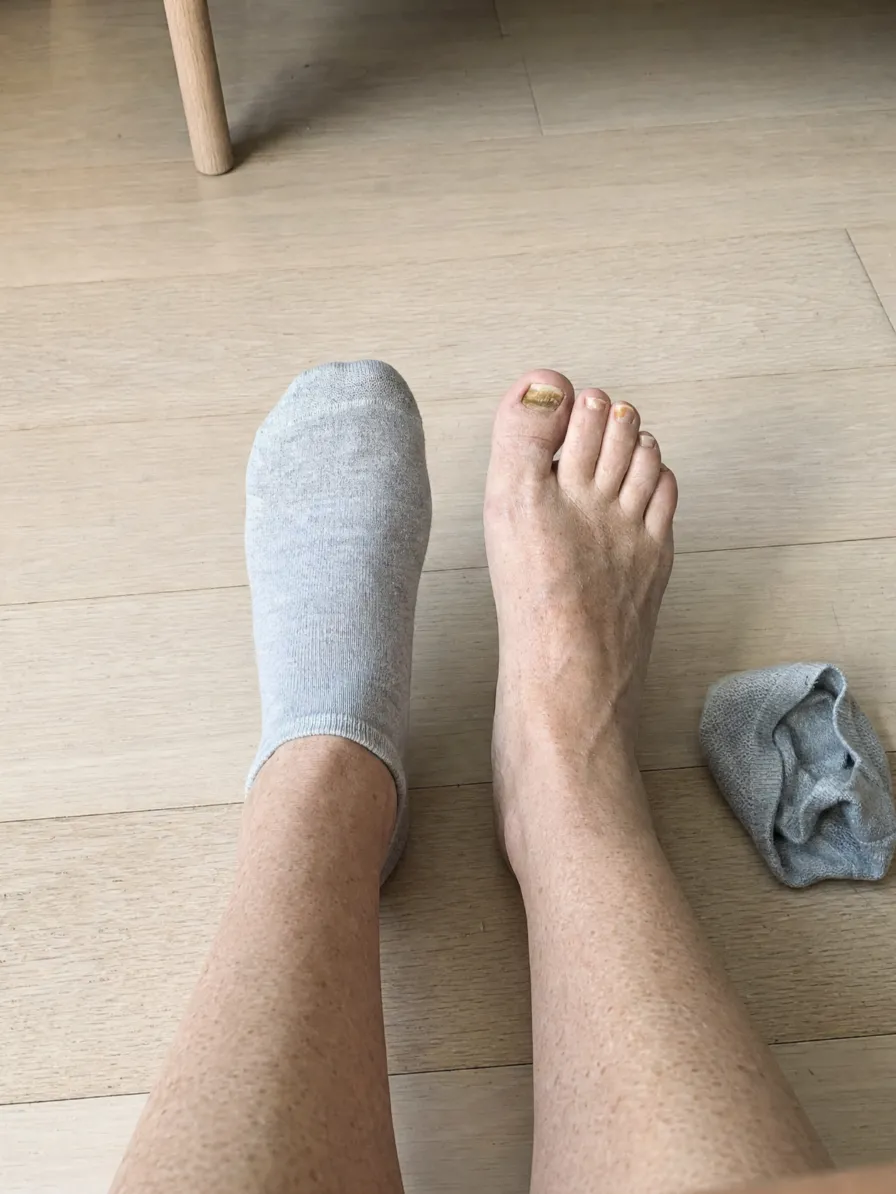

Two people, one sentence between them, and the truth most British women in their fifties have never been told about thickening, yellowing toenails.
It was a Tuesday afternoon in February when a young woman at a salon in Bath asked me, very politely, to leave.
I had walked in for what was supposed to be a small kindness to myself. A pedicure. My fifty-fourth birthday had just passed. My daughter had pushed a voucher into my hand at Christmas and said, “Mum, please. Just go.” I had carried that voucher in my purse for seven weeks before I worked up the courage to use it.
The technician was perhaps twenty-two. She had been chatting easily about her boyfriend. Then I peeled off my socks.
The talking stopped.
She did not look up at me. She looked at my feet, then at her supervisor, then at her supervisor again. There was a small, polite conversation in a language I do not speak. Then the supervisor came over, knelt down, and said in a very gentle voice that they could not work on my nails today. She used the word “infection.” She said it twice. She said I should see a doctor. She offered me my voucher back.
I walked out of that salon with my socks bunched in my fist. I sat in the car park for thirty-five minutes before I trusted myself to drive. I was crying the kind of crying that does not make any noise.
I am writing this now because I want every woman who has ever hidden her feet to know what I learned in the months that followed. And because I am sitting here, in May, wearing the open-toed sandals my daughter bought me three Christmases ago that I had never once taken out of the box.
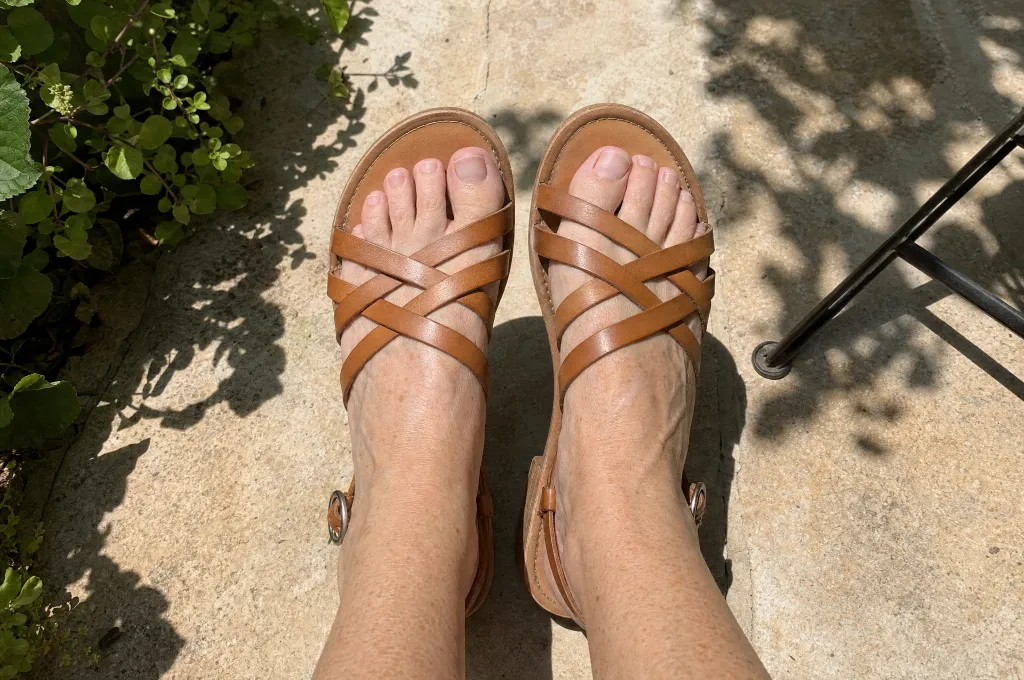
Seven years of small, private surrenders
My husband, Peter, is a kind man. We have been married for thirty-one years. And for the last seven of them, I had not let him see my bare feet.
I wore socks to bed. I changed in the bathroom with the door closed. When we went on holiday to Cornwall the summer before last, I told him my feet “got cold easily” and slept in cotton ankle socks every single night. He never questioned me. I think part of me wished he would.
It started small, the way these things do. A faint yellowing on the big toe of my right foot. Then a thickening, like the nail had decided to grow upward as well as forward. Then the second toe. Then the ones either side. By the time I was fifty, three of my ten toenails had turned a colour I could only describe as old tea – brown at the edges, white-yellow in the middle, and so brittle that pieces would crumble off into my socks at the end of the day.
I tried everything Boots sold. Every lacquer. Every cream. The little file-and-paint kits that promised “results in 4 weeks.” I bought tea tree oil from the high street and white vinegar from the supermarket and listerine from the bathroom cabinet. I soaked. I scrubbed. I filed. I prayed.
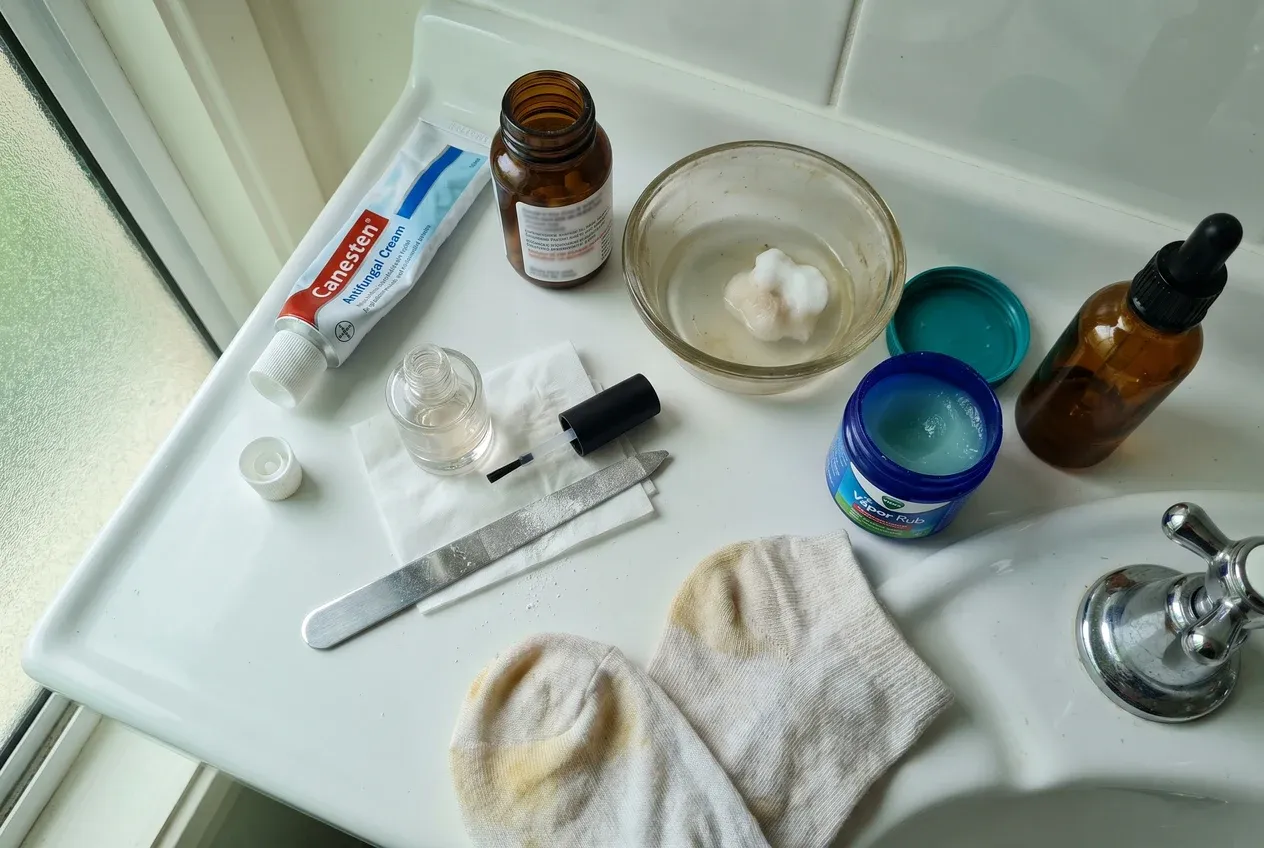
Nothing made any difference. Not one single product. Some of them seemed to help for a fortnight and then the nail would come back worse than before – angrier, thicker, more discoloured.
I stopped going swimming. I stopped going to my friend Bridget’s hot tub at her sixtieth. I stopped buying any shoe that was not entirely closed. I stopped dancing with Peter at weddings because someone might step on my foot and I would have to take my shoe off. I stopped looking at my own feet in the bath.
And I had told nobody. Not Peter. Not Bridget. Not my GP. Not my own daughter. I had walked around for seven years carrying this small, private, festering thing entirely on my own. Because I was certain – entirely, completely, dead-certain – that this was just what happened when a woman got older. That this was age. That this was the price.
I was wrong. I was so spectacularly wrong that when I finally heard the truth, I cried again. But this time I cried in a different way.
The two-minute interview that changed everything
I was driving back from Sainsbury’s a fortnight after the salon. Radio 4 was on. I was barely listening. They were interviewing a European dermatologist about resistant skin and nail infections – a man I had never heard of.
His name was Dr Vujasinović. He had a warm, slightly accented voice and he was very calm and very direct. The presenter asked him why so many people in the UK seemed to be suffering with nail fungus that “just wouldn’t shift” no matter what they tried. And he said something that made me pull over into a lay-by on the A36 and sit very still for several minutes.

He said, in essence, this:
“What most people are calling ‘stubborn nail fungus’ is not stubborn. It is a different organism. Standard antifungals were never designed to break it down. You can apply them every day for a year – you are essentially polishing the outside of a fortress. Until you address the protective biofilm the fungus has built around itself, the nail cannot heal. This is not a hygiene problem. It is not a moral failing. It is a microbiology problem with a microbiology solution.” – Dr Vujasinović, dermatovenerologist
I sat in that lay-by and I looked it up on my phone. Dr Vujasinović was not a wellness influencer. He was not selling a course. He was a 64-year veteran consultant who had lectured at medical universities across Europe and co-authored several books in his field – all of which I had to scroll through twice to believe.

- Over 64 years of clinical practice in dermatology and venereology
- Lecturer at leading European medical universities
- Co-author of several best-selling reference books in the field of dermatology
- Long-standing focus on resistant fungal and skin-barrier conditions
- Invited speaker at international dermatology and skin-microbiome conferences
- Regular contributor to peer-reviewed work on nail-bed pathology
- Lead consulting expert behind the Golden Tree FunguLux formulation
And then I read the line on his bio that broke me open. He had spent the last decade specifically researching why so many patients – particularly women over fifty – kept coming back to his clinic with nails that “would not heal.”
He had built his entire career around the exact thing I had been hiding from my husband for seven years. And he was saying, in the most unshowy, unsalesy voice imaginable, that there was an answer.
What “stubborn” nail fungus actually is
To understand what Dr Vujasinović was talking about, you have to understand a small thing about how nails are built.
A healthy toenail is essentially a sheet of compressed protein called keratin, sitting on top of the nail bed. The nail bed has its own tiny ecosystem – a balanced film of skin bacteria and natural oils that keeps everything sealed, supple, and inhospitable to fungi.
When that ecosystem is intact, fungi simply cannot get a foothold. Even if a spore lands on your foot in a changing room, the natural defences of the nail bed wash it away within hours. This is why most people walking around in the world never develop nail fungus, despite being exposed to it daily.
- The keratin sheet stays clear, smooth and faintly translucent
- The nail bed maintains a slight acidity that hostile microbes cannot tolerate
- Natural skin oils form a microscopic barrier the fungus cannot breach
- Healthy circulation flushes away spores before they can root
That is the design. It works for most people, most of the time. So what goes wrong?
Then a different kind of fungus arrives – and the entire system breaks
In the last decade, Dr Vujasinović explained, dermatologists across Europe began seeing a particular strain of fungus that behaved completely differently from the textbook ones. German microbiologists isolated it. French researchers traced its genetic mutations. The medical community began informally calling it “the mutant” – a strain that has developed near-complete resistance to the standard antifungals sold in pharmacies.
It is now formally referred to in some studies as Tinea Pedis Resistens.
And here is what makes it different. Instead of trying to colonise the nail surface like ordinary fungi, this strain burrows directly into the keratin matrix and immediately builds a microscopic protective shell around itself called a biofilm. That biofilm is the reason nothing you buy at the chemist works.
This is the exact cascade Dr Vujasinović drew for me on the back of an envelope when, weeks later, I finally got an appointment with him.
Picked up from a changing room, a hotel bathroom, a borrowed pair of shoes, or simply from the air. Most healthy nails fight it off – but if the nail bed is even slightly compromised by age, dryness or a microscopic injury, the spore takes root.
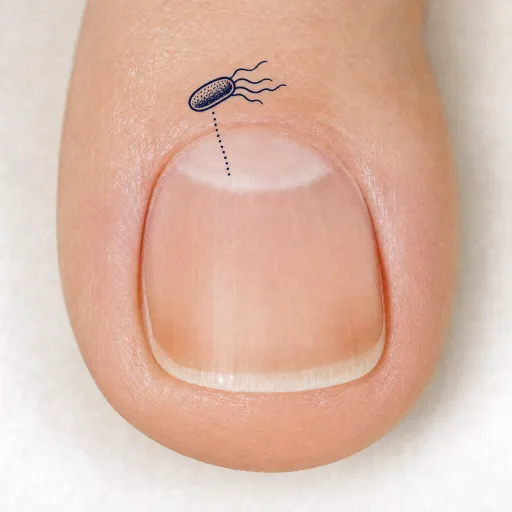
Within 48 hours, the resistant strain secretes a thin polysaccharide shell around itself. This biofilm is microscopically thin but chemically formidable – it works like a waterproof coat on the colony, preventing standard antifungals from ever reaching the actual organism.
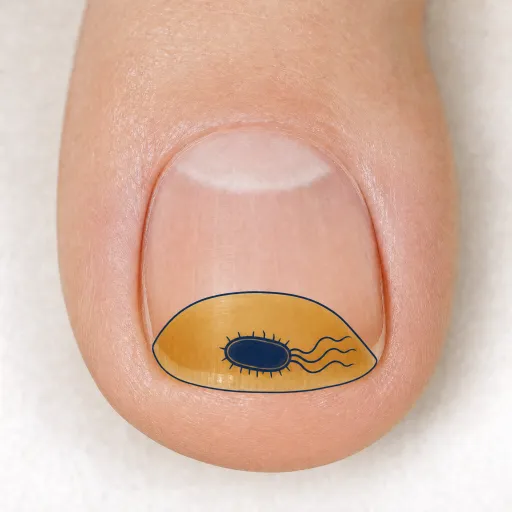
This is why the cream from the chemist seems to “stop working.” It never worked. It cannot pass through the biofilm. You are essentially painting over a sealed bunker. The fungus inside is completely undisturbed.
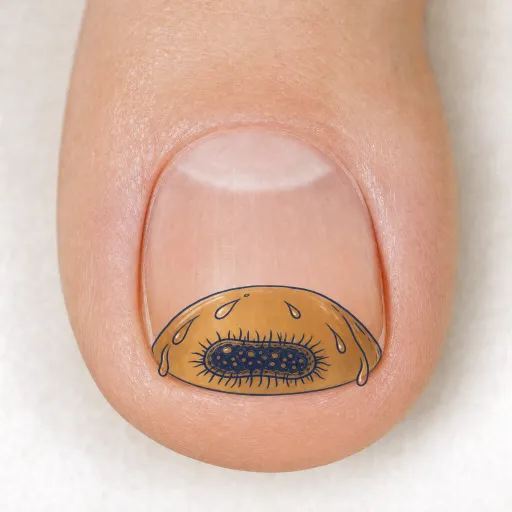
Safe inside its biofilm, the fungus feeds on the very protein your nail is made of. The matrix begins to lose its structure. The nail starts to turn the colour of old paper – first yellow, then brown, then white-grey.
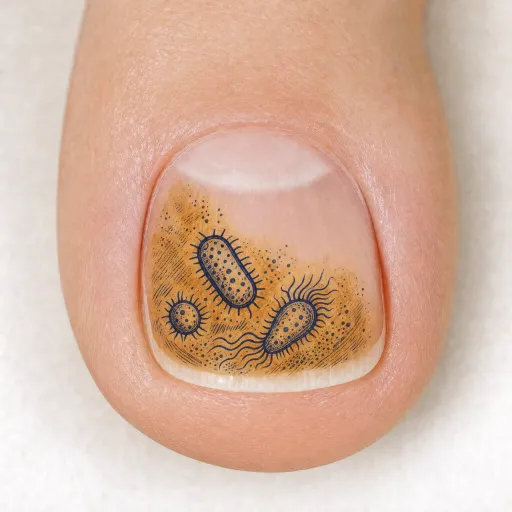
As the keratin breaks down, the nail tries to compensate by growing thicker. It distorts upward. It becomes painful in shoes. Tiny air pockets form between the nail and the bed, which the fungus uses to spread to neighbouring toes.
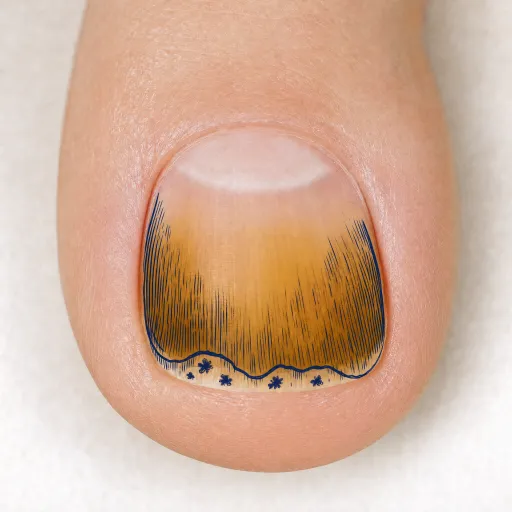
Yellow-brown discolouration. Brittle, crumbling edges. Painful pressure inside closed shoes. Cracked, distorted nail plates. The certainty that you can never wear sandals again. Not one of these symptoms is “ageing.” They are the predictable, mechanical output of a sealed colony you have been unable to reach.
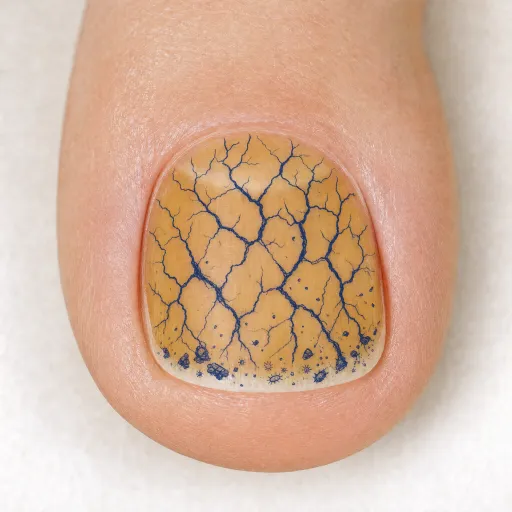
Look at that chain again.
Every single one of the things I had been quietly hating about my own feet for seven years was not me. It was not my hygiene. It was not my age. It was not “the price of being fifty-four.” It was a measurable, mechanical sequence of events that started with one resistant spore and one chemically unbreakable shell.
This had a cause. And causes – Dr Vujasinović said this very simply – can be addressed.
Why every other thing you’ve already tried failed
“Most over-the-counter creams contain a single antifungal molecule that was developed decades before this resistant strain existed – they cannot pass through the biofilm. Nail lacquers seal the surface, which is the opposite of what is needed. Oral antifungals can carry significant side effects on liver function and most GPs will not prescribe them for cosmetic-grade infections. Tea tree oil and vinegar are useful for prevention but lack the carrier oil that allows the active compounds to reach the colony. Almost every product on the British high street is treating the wrong layer of the nail.”
What is actually required
My first thought, sitting in that lay-by on the A36, was: surely there must be something stronger I can buy. There must be a “real” antifungal cream the chemist keeps behind the counter.
There isn’t. And even if there were, it would not penetrate the biofilm. The mechanism is the issue, not the strength.
What Dr Vujasinović explained – and what every clinical paper I read afterwards confirmed – is that to actually clear a resistant nail infection, four things have to happen, in sequence, in the same application:
- The nail surface must be made permeable – the keratin sheet has to be opened up enough for an active compound to actually pass through
- The biofilm around the colony must be chemically dismantled – without this, nothing else reaches the fungus
- The active antifungal compounds must be carried into the nail bed by an oil that penetrates rather than sits on the surface
- The surrounding tissue must be conditioned so a new, healthy nail can grow in cleanly and so the infection cannot recur
No single off-the-shelf product does all four. That is why people like me spend a decade applying cream after cream and never get anywhere. We are doing one out of four steps and wondering why we are not healing.
The formulation that finally pulled it together
For the better part of a decade, Dr. Vujasinović had been searching for a single topical formula that would do all four jobs at once – without prescriptions, without oral medication, and without anything harsh enough to damage the surrounding skin.
He eventually partnered with the Golden Tree research team to formulate exactly that. They tested combinations of essential oils for over two years before settling on a precise four-oil ratio that, according to their internal trials, did what nothing on the British high street has been able to do.
It is called Golden Tree FunguLux.
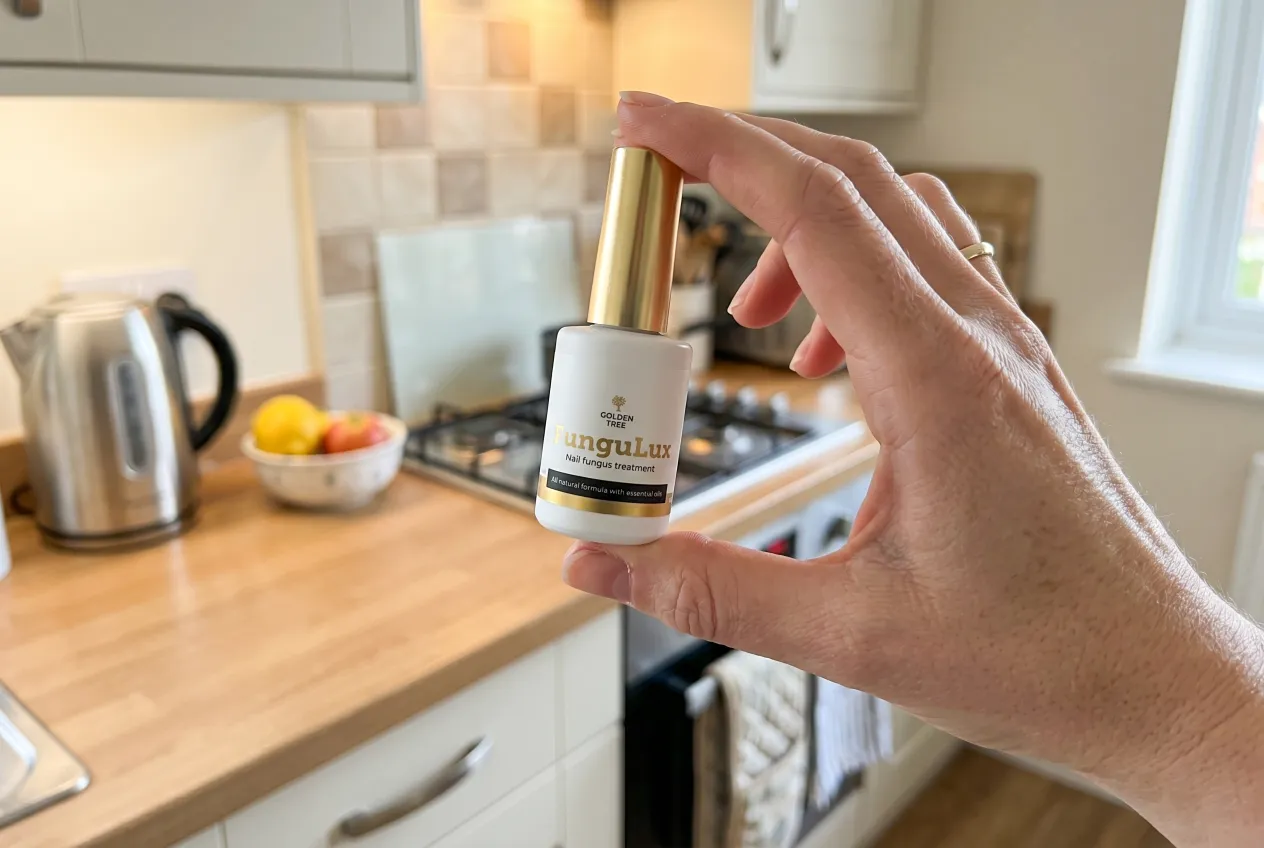
It is a small amber bottle with a precision applicator. You apply it once a day, ideally straight after the shower – when the nail is warm, soft and at its most porous, so the actives can pass through the keratin sheet rather than sit on top of it. It takes around fifteen seconds. There is no smell to speak of. There is no sting.
Inside it are four essential oils, each chosen for one specific job in the four-step sequence Dr. Vujasinović had outlined.
- Eucalyptus globulus leaf oil – the carrier. Opens the keratin matrix and allows the other three oils to penetrate the nail bed rather than sit on the surface. Without this, nothing else reaches the colony.
- Oregano oil – the demolisher. Rich in carvacrol and thymol, two compounds clinically shown to chemically dismantle the protective biofilm the resistant strain hides behind. This is the step every other product on the high street skips.
- Clove bud oil – the antifungal payload. Once the biofilm is breached, clove bud oil delivers eugenol directly into the nail bed, where it disables fungal cell reproduction at the source. This is what stops the colony spreading.
- Lavender oil – the conditioner. Soothes the surrounding skin, supports cell-wall repair, and creates an environment in which clean, healthy keratin can regrow. It is also what prevents recurrence once the original colony is cleared.
“We did not invent these four oils. Each one has a long history in dermatological literature. What we did was find the precise ratio in which they work as one system instead of four separate ingredients. That is what makes the formula effective against the resistant strain – and that is what no single-ingredient product can replicate.” – Dr. Vujasinović
The formula was developed through dermatologist-led research, manufactured to GMP and HACCP standards, trusted across Europe by more than 1.5 million customers, and backed by a 60-day money-back guarantee.
Four months later
I started applying FunguLux on the evening of 14 March, after my first shower of the day. I gave myself permission to give up after three weeks if I saw nothing.
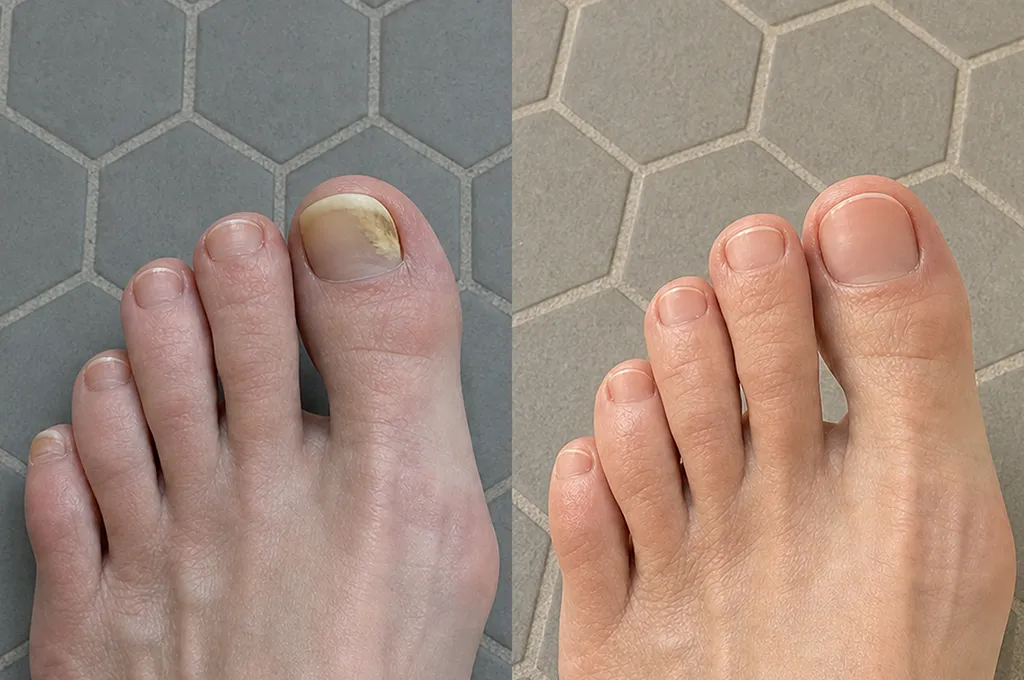
By week two, the nails on my big toes had stopped looking quite so tea-coloured at the edges. By week four, the thickening had visibly reduced – I could trim them with normal clippers again instead of the heavy-duty ones I had been using for years. By week ten, fresh, pink, uniformly-coloured nail had grown in at the base of every affected toe and was pushing the old, damaged keratin upward. By week sixteen, my feet looked like the feet of a different woman.
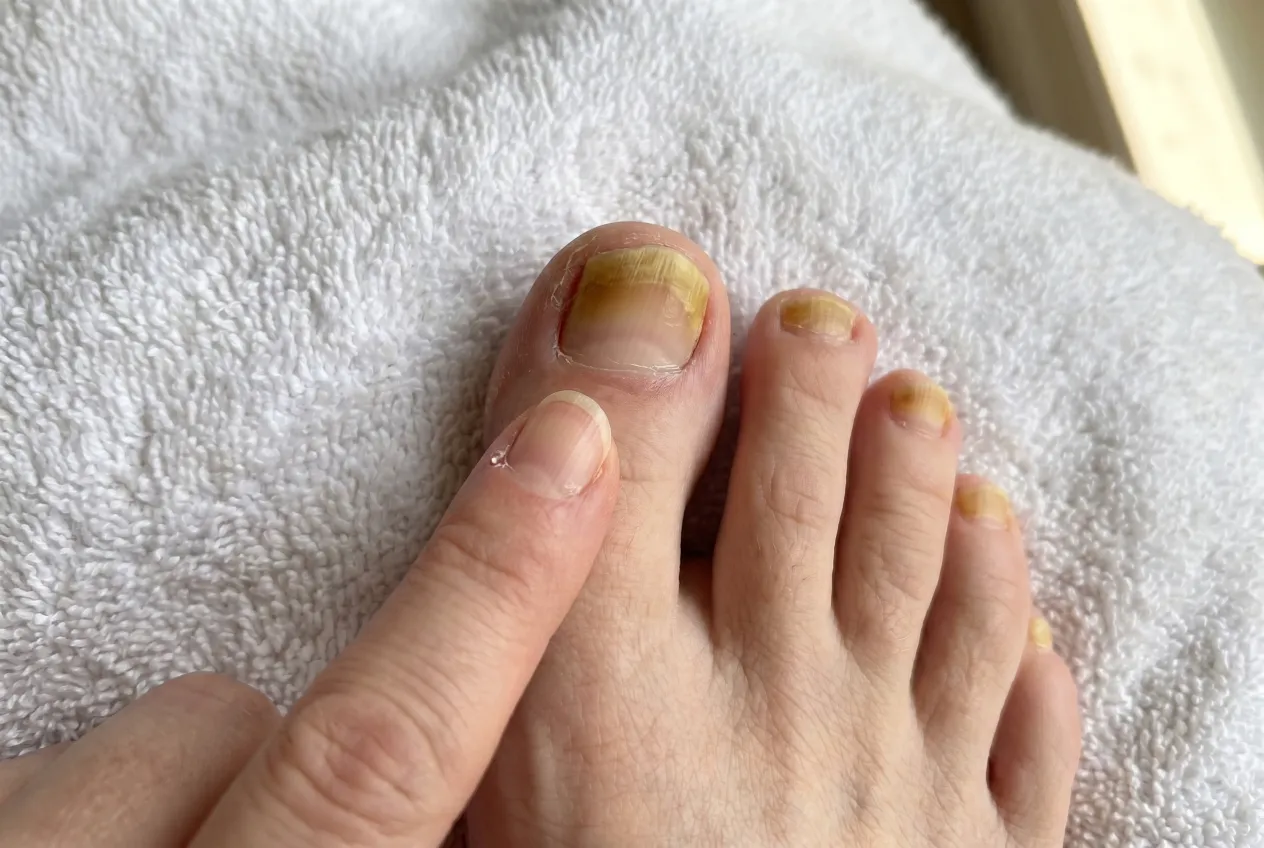
- The yellow-brown discolouration was completely gone from my big toes
- The thickening had reduced enough that I could wear closed shoes comfortably for the first time in five years
- The brittle crumbling at the edges had stopped entirely – the nails were growing in smooth and clear
- I was, almost without realising it, walking around the house barefoot again
The clinical study Golden Tree ran on the formulation found broadly the same pattern across the wider group of participants:
I have since spoken to three other women in Bath who tried it after I quietly mentioned it. None of them had told anyone about their feet either. All three of them are now also wearing sandals. Two of them sent me photographs.
In their own words

“I was sceptical at first – I’d genuinely tried everything Boots stocks. My GP was even impressed when I went in for a different appointment and showed her. My toenails have completely cleared up, and I no longer feel pain when I wear shoes. It’s been a huge boost to my quality of life.”
– Sylvia R., 58, Manchester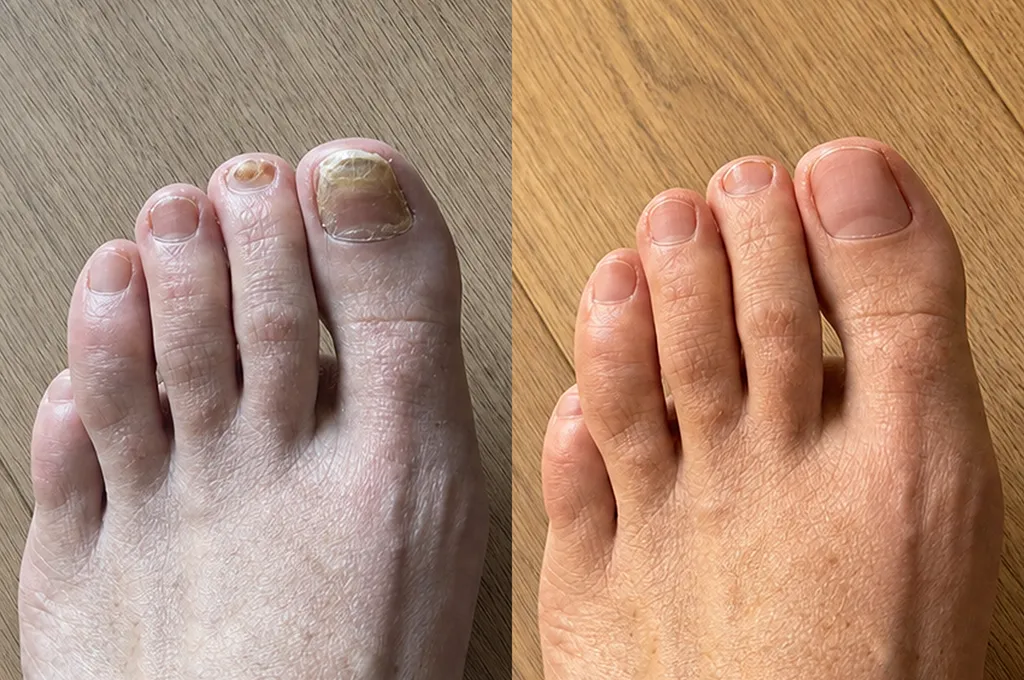

“I’d struggled with nail fungus for over a decade. Nothing I tried worked until this. I saw noticeable improvements in just a month. The application after my shower fits straight into my routine – no extra time, no fuss. I cannot recommend it enough to anyone in the same position I was in.”
– Sharon M., 51, Edinburgh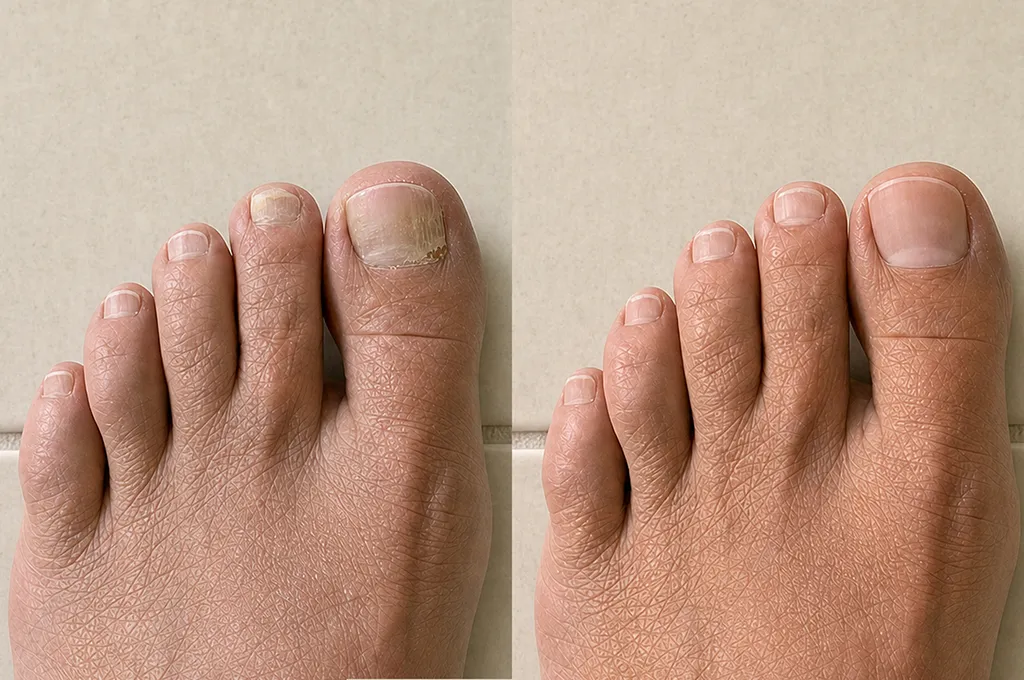

“Finally, a product that does what it actually says. I started seeing changes in the appearance of my toenails within weeks. They’re growing back normally and I am so relieved to have found something that works after so many failures. I had honestly given up.“
– Olivia L., 62, LeedsWhere to get it
FunguLux isn’t sold in Boots or elsewhere on the high street. It’s produced in limited batches by Golden Tree, the European wellness manufacturer that funded Dr Vujasinović’s formulation research, and shipped directly to UK addresses in plain, discreet packaging. A single bottle would normally retail at £59.90 – but the longer protocols are currently discounted below retail while the current batch lasts.
A single 30-day bottle now costs £49.90 – and from there the savings deepen.
The 90-day pack – Dr. Vujasinović’s minimum recommendation – is £134.70 instead of the usual £179.70, a £45 saving.
The 180-day pack – the one he recommends for anyone whose nails have been compromised for several years – is currently £239.40 instead of £359.40, saving you £120.
Because the resistant strain takes time to clear out of the keratin matrix and grow out with healthy nail, Dr Vujasinović recommends a minimum of three months of consistent daily application – and ideally six months for nails that have been infected for many years.
Every package is backed by a Golden Tree 60-day money-back guarantee – even if you send the empty bottle back, the full amount is refunded, no questions asked.
If you recognised yourself anywhere in my story…
See the full formula Dr Vujasinović helped develop, the complete clinical breakdown, and the current discounted protocols on the next page.
SEE THE FULL FORMULA →P.S. I wore sandals to my niece’s wedding in April. Peter looked down at my feet halfway through the reception and said, very quietly, “love, your feet look beautiful.” We had been married for thirty-one years and that was the first time in seven of them I’d let him see them. If there is any part of this story you recognise, please don’t carry it on your own for as long as I did. The next page has everything you need to see whether this is the answer for you, too.